Colombia Valle De Cauca Decaf
Colombia Valle De Cauca Decaf
Couldn't load pickup availability
Colombia Valle De Cauca Decaf
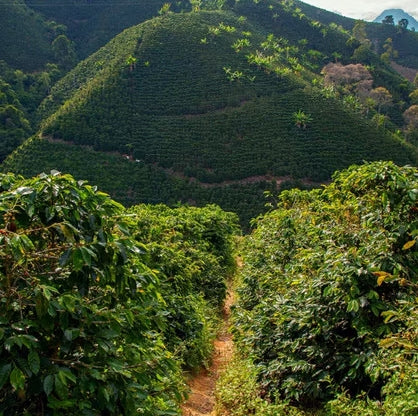
The Valle del Cauca is a place where natural resources, water management, and friendly environmental practices are keenly preserved by those who live and farm there. As one of Colombia’s two main biological conservation corridors, Cauca Valley is home to World Heritage-listed national parks, wildlife, coffee farming and water sources that give life to the surrounding land.
The sugarcane decaffeination process begins with the fermentation of molasses derived from sugarcane to create ethanol. This alcohol is then mixed with acetic acid (the main component of vinegar) to create the compound ethyl acetate. In a direct solvent-based process, low-pressure steam opens the pores of the coffee beans. Then the beans are soaked in a solution of water and ethyl acetate. The solvent binds to the salts of chlorogenic acids and allows the removal of caffeine. After flushing the beans with ethyl acetate repeatedly, up to 97% of the caffeine is extracted. Because ethyl acetate comes from sugarcane and is an organic compound that can effectively remove caffeine, the coffee’s flavor attributes are not extracted.
I find this to be a great decaf option because of the flavor that is preserved in the sugarcane process. Right now, we use this on espresso in house and it always makes for a great cup at the end of the day.
— Robbie Nuila, Head Roaster
Tasting Notes: Milk Chocolate, Almond, Strawberry, Vanilla
Process: Sugarcane Decaf
Varietal: Caturra, Castillo
Altitude: 1750masl
Origin: Valle de Cauca, Colombia
Farm: Smallholder Farmers
Bag size: 8oz
Share